
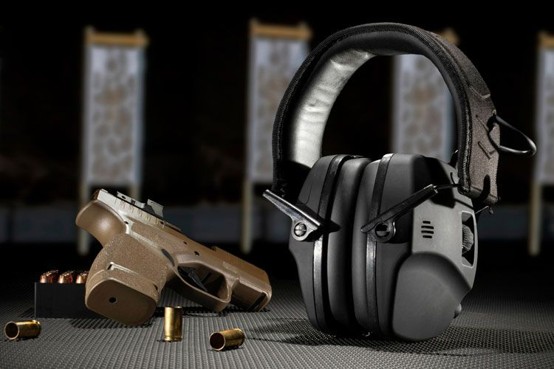
Firearms produce sound levels that can instantly damage your ears. Therefore, all shooters should understand the science of hearing protection. The experts at H&H Shooting Sports can help. Whether you’re a first-timer or a seasoned pro, you must protect your hearing at the shooting range. Let’s examine your options for gun range hearing protection and how to keep your ears sharp for years to come.
How Shooting Affects Your Hearing
Sound is measured in decibels (dB), with typical everyday conversations happening at about 60 dB. Prolonged exposure to any sound over 85 dB can cause hearing loss over time. That’s concerning for shooting enthusiasts, as a typical firearm produces a loud crack ranging from 140 dB to 165 dB.
At these extreme noise levels, sound waves travel down your ear canal and hit your eardrum with intense force. This force can instantly damage the tiny hair cells inside your inner ear. Unfortunately, those delicate hair cells won’t grow back after they break. A single unprotected shot can cause permanent damage, so gun range hearing protection is necessary.
Why Hearing Protection Is Essential
Using proper hearing protection for shooting actively prevents noise-induced hearing loss (NIHL) and tinnitus, which is a constant ringing or buzzing in the ears. Reliable equipment will create a barrier that absorbs and reflects dangerous sound waves before they reach your inner ear. This barrier provides crucial noise reduction for firearms, lowering the decibels to a safe level.
Types of Hearing Protection
You have several great options from which to choose when searching for the best shooting ear protection:
- Foam Earplugs – These are affordable and fit directly inside the ear canal to block sound.
- Custom Molded Earplugs – These are shaped exactly to your ear for maximum comfort and a perfect seal.
- Passive Earmuffs – These sit over your entire ear and use acoustic foam to block loud noises.
- Electronic Earmuffs – These battery-powered muffs amplify quiet sounds like talking but instantly shut off their microphones when a loud noise occurs.
Comparing Shooting Earmuffs vs. Earplugs
Earplugs and earmuffs both offer excellent protection, but they work in different ways:
- Earplugs – Earplugs go inside the ear canal. They’re lightweight, easy to carry, and don’t interfere with your cheek weld when aiming a rifle or shotgun. However, they can be tricky to insert correctly.
- Earmuffs – Earmuffs sit over the ears. They’re easy to put on and take off, making them a favorite for many shooters. They also protect the bone behind your ear, which can transmit sound waves. The downside is that earmuffs can get warm during the summer months and might bump against certain rifle stocks.
How to Protect Your Hearing at the Shooting Range
If you want to protect hearing at shooting range facilities, you must be consistent. Here are a few simple tips to keep your ears safe:
- Double Up – Wear foam earplugs underneath your earmuffs for the highest level of noise reduction.
- Check the NRR – Look for the Noise Reduction Rating (NRR) on the packaging. A higher number means better protection. Aim for an NRR of at least 25.
- Ensure a Good Fit – Earmuffs must seal completely around your ears. Safety glasses with thick frames can break this seal, so look for glasses with thin temples.
Common Mistakes to Avoid
Avoid these common errors to keep your ears completely safe:
- Taking Gear Off Too Early – Never remove your ear protection while people are still actively shooting nearby.
- Inserting Foam Plugs Incorrectly – Foam plugs must be rolled tightly, inserted deeply into the ear canal, and held in place while they expand. If they stick out too far, they aren’t working.
- Using Old or Damaged Gear – Earmuff cushions get stiff and crack over time. Replace worn-out foam to maintain a tight seal.
FAQ About Hearing Protection Around Firearms
What’s the Best Ear Protection for Shooting?
The best protection is the one that fits you properly and you’ll wear it consistently. Electronic earmuffs are highly recommended because they allow you to hear range commands while blocking loud noises.
Can I Just Wear My Noise-Canceling Headphones?
No. Noise-canceling headphones are built for airplane engines and background chatter. They’re not designed to block the sudden, high-decibel impulse noise of a firearm.
What Does NRR Mean?
The Noise Reduction Rating is a unit of measurement that tells you how many decibels of sound the hearing protection will block when worn correctly.
Is It Safe to Shoot Outdoors Without Hearing Protection?
No. While sound disperses faster outdoors than indoors, the decibel level of a firearm is still dangerously high and will cause permanent hearing damage without protection.
How Often Should I Replace My Earmuff Pads?
You should replace the foam pads on your earmuffs every six to 12 months, depending on how often you shoot and how much you sweat.
Contact Us for Firearm Hearing Protection in OKC
H&H Shooting Sports offers a wide selection of top-quality hearing protection for all types of shooters. Contact us in Oklahoma City to find the right hearing accessories for your needs.
